
Why laser cleaning may not be as simple as it looks in videos
There are many laser cleaning devices available on the market today, but it is much more difficult to find clear and specific instructions on how these devices actually work in practice. Videos of laser cleaning circulating on the internet often create the impression that the process is extremely fast, simple, and time-saving — rust, oxides, paint, varnish, and other surface coatings seem to disappear from the substrate almost like magic. And for certain applications, this is indeed the case!
However, the final result of laser cleaning depends directly on how well the machine parameters and the surface being treated are balanced with each other. If this balance is missing, the expected clean surface may instead turn into a damaged substrate — or the machine may appear to do almost nothing in the hands of the user.
For this reason, purchasing a machine based solely on videos seen online can later lead to significant disappointment. In reality, the working process and the results may not look anything like what is shown in short video clips. In most cases, the issue is not the power of the machine or the quality of its components, but rather unrealistic expectations and the operator’s level of experience.
Where laser cleaning actually works best
Laser cleaning is not a universal solution and is not intended to replace every surface treatment method. In many cases, blasting and abrasive cleaning methods are significantly faster. The strength of laser cleaning becomes most evident in situations where process control and final surface quality are critical.
Laser cleaning works particularly well when:
- the substrate must not be damaged
• the work must be performed in an environment with minimal waste
• abrasive methods are too aggressive
• very thin and uniform surface layers need to be removed
Laser cleaning is therefore not a cheap alternative, but a smarter and more precise cleaning solution.
Copper (from left to right) – oxidized, cleaned with higher power, cleaned correctly.
Why output power is not the most important parameter
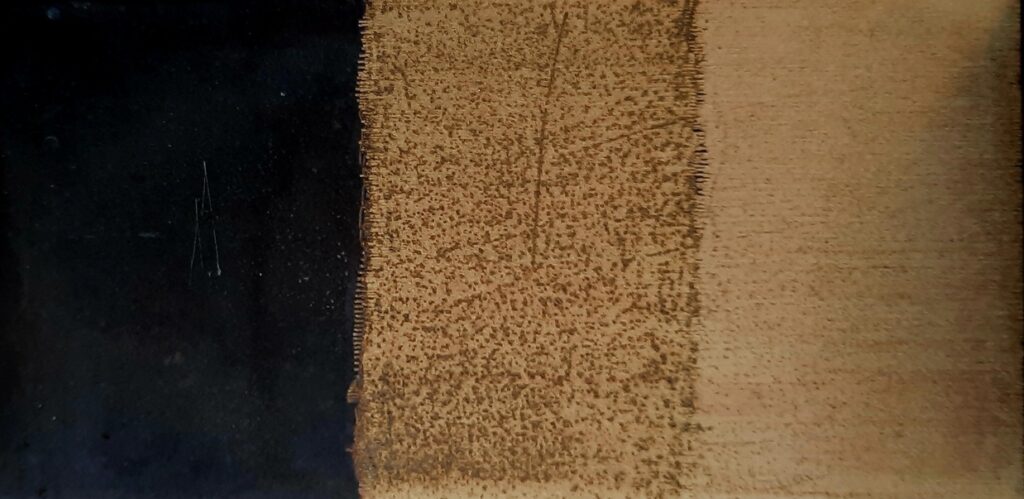
It is often assumed that higher power automatically means faster and better results. In reality, excessive output power can instead cause damage to the substrate. In metals, this may result in melted rust, heavy oxide layers, or overheating of the material. With materials that are more sensitive to heat, the risks are even greater — wood may char, plastics may melt, and ceramics may crack.
It is important to understand how changing each parameter of the machine affects the cleaning result. For example, narrowing the laser beam concentrates more energy on the surface, making the cleaning process more aggressive but also generating more heat. A wider beam, on the other hand, distributes the energy over a larger area and reduces surface heating.
With pulsed lasers, additional parameters such as pulse duration and repetition frequency also play a major role in the cleaning result. (We will discuss these in more detail in upcoming blog posts.)
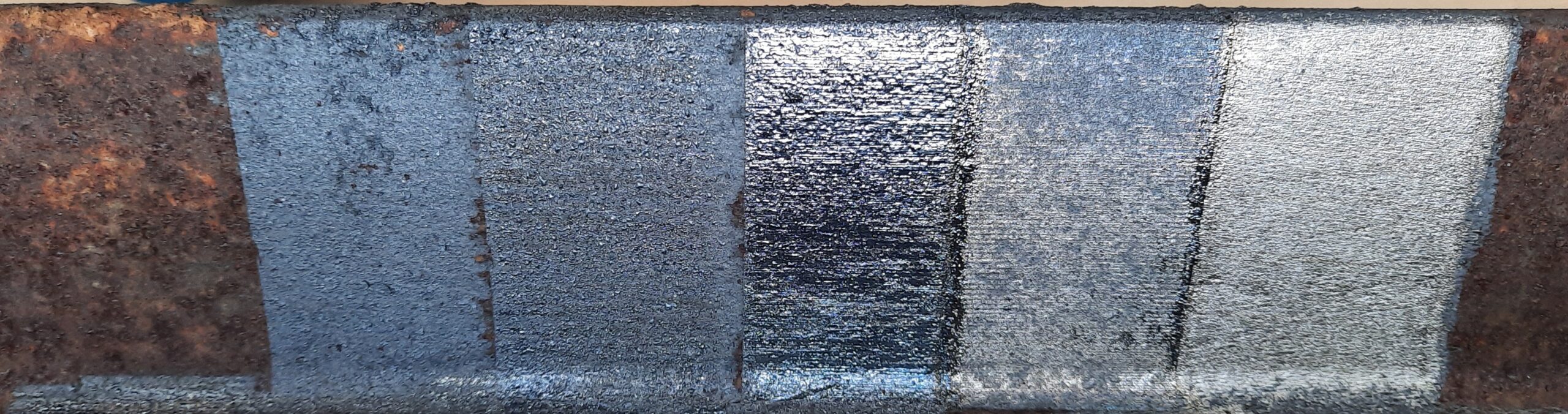
Iron (from left to right):
- Original surface before cleaning – rusty!
- Grey – only the thin top layer of rust has been removed (most videos showing thick rust removal actually show only this grey surface)
- Melted rust – too much heat applied to the surface results in melted rust
- Oxidized – the cleaned surface is covered with an oxide layer caused by heat
- Partially cleaned – a darker grey tone indicates the surface is not yet completely rust-free
- Fully clean – a properly cleaned surface has a light grey tone
This is where the experience of the machine operator becomes essential. An experienced operator recognizes early during the process when parameters must be adjusted before any damage occurs.
What experienced operators evaluate before starting a job
Every laser cleaning job begins with an assessment of the surface to be cleaned.
What is the substrate material, and how does it react to heat or laser radiation? Even different metals — steel, stainless steel, cast iron, or aluminum — behave very differently under the same machine settings and can leave different surface finishes.
Next, the removable coating must be evaluated. Light surface rust, heavy oxide layers formed over decades, old paint, fresh paint, oils, or carbon deposits all absorb laser energy differently and may therefore require different machine parameters.
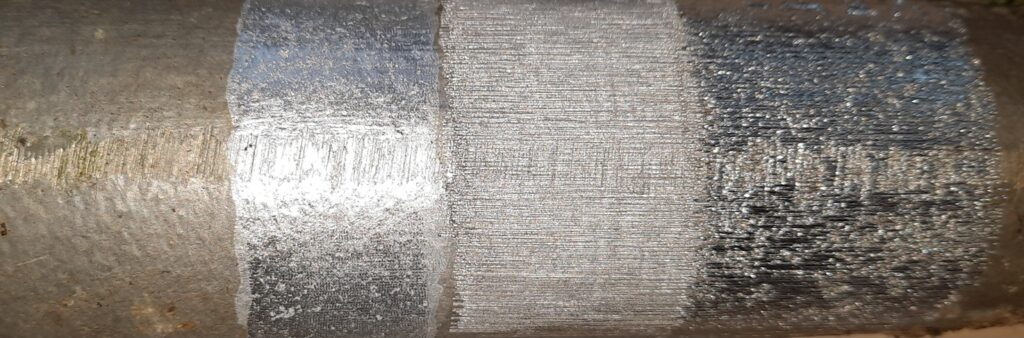
Aluminium (from left to right) – uncleaned, cleaned, beam too aggressive (etching into the surface), melted (too much power).
This is why it is impossible to establish a universal rule of thumb for laser cleaning, such as how many square meters can be cleaned per hour. Every job is different from the previous one.
An experienced operator can usually select approximate starting parameters based on the desired final result. In some cases, a slight color change on the surface is acceptable; in others, absolutely no trace of the laser beam movement can remain.
This preparation — understanding materials, coatings, and the correct parameter selection — is usually missing from short video clips. Yet it is precisely this knowledge that creates the impression of the “easy and fast” laser cleaning often seen in videos.
Conclusion
Laser cleaning is not complicated, but it requires a thoughtful approach before starting the work. When there is a clear understanding of how different materials behave under laser radiation and how to adjust parameters as working conditions change, the entire cleaning process becomes significantly easier and the final result much higher in quality.
Laserest OÜ does not only sell machines. A strong emphasis is placed on training users, ensuring that operators understand from the very beginning how to apply laser cleaning technology in real-world applications — without long periods of trial and error.
Years of practical experience in laser cleaning across different materials and surface coatings provide us with a solid knowledge base that we share with our customers through comprehensive and practical training programs.